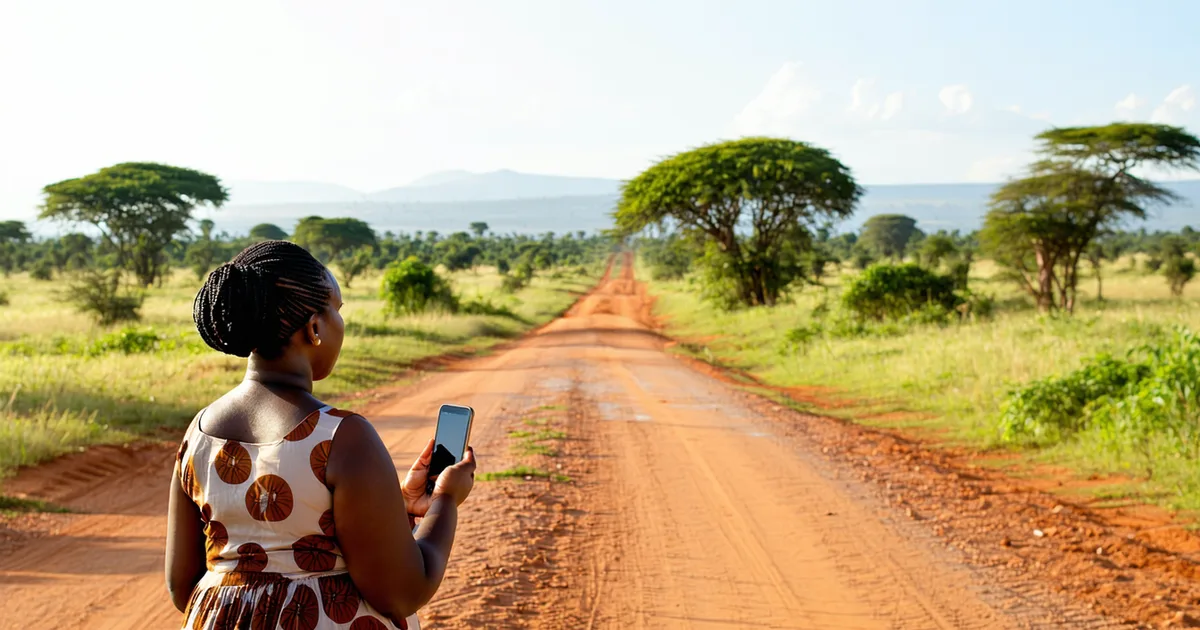
There is a straightforward geography problem at the heart of healthcare in rural Kenya. A community health worker in Samburu County, a smallholder farmer in Migori, a young mother in Kwale — all of them may be living more than two hours from the nearest functioning clinic, and the journey itself can cost more than the consultation fee. Distance is not an inconvenience; it is the primary barrier between a person and the care they need.
Telemedicine does not eliminate that geography. It cannot build roads or add hospital beds. What it does is remove the requirement that a conversation between a patient and a practitioner happen in the same physical room. That single change has larger consequences than it might appear.
What the access gap actually looks like on the ground
Kenya's public health system is built on a tiered referral model: community health units feed into dispensaries, which feed into health centres, which feed into sub-county and county hospitals. The model is sound in theory. In practice, many dispensaries and health centres operate with limited staffing — a single clinical officer covering a catchment area of tens of thousands of people, or a facility that is nominally open but has no practitioner present for routine consultations on most days.
Private clinics fill some of the gap in peri-urban areas, but they introduce a cost barrier. A standard consultation fee at a private clinic in a county town, combined with matatu fare from a rural sub-location and a day of lost income, can represent a meaningful proportion of a household's weekly budget. For a patient managing a stable but chronic condition — blood pressure, controlled diabetes, mild asthma — making that trip every four to six weeks is often not sustainable.
The result is a pattern that practitioners in Kenya have described consistently: patients attend clinics when they are acutely unwell but skip follow-up visits when they are relatively stable. The preventive and monitoring work that keeps conditions from deteriorating goes undone, not because patients do not understand its importance, but because the cost of access — in time, money, and effort — is simply too high for a visit that does not feel urgent.
Where virtual consultations fit — and where they do not
It is worth being precise about what telemedicine can and cannot do in this context. We are not saying that remote care is a substitute for physical examination, emergency treatment, or in-person procedures. A virtual consultation cannot assess acute abdominal pain with the same confidence as a trained clinician examining a patient in person, and it is not designed to try. Patients with urgent, complex, or physically manifesting conditions still need in-person care.
What virtual consultations do well is the follow-up layer: medication check-ins, symptom monitoring for stable conditions, prescription renewals, health education conversations, and triage decisions about whether a physical visit is actually needed. These interactions make up a large share of all primary care activity, and many of them do not require the practitioner to be physically present with the patient to be done well.
For a patient in western Kenya managing hypertension, for example, the most important clinical action after initial diagnosis and stabilisation is regular monitoring of blood pressure and adherence to medication. A licensed practitioner can ask the right questions, review reported readings, adjust guidance if needed, and schedule a physical visit if the picture changes — all through a voice call or a structured WhatsApp exchange. The journey to a clinic is reserved for when it actually adds clinical value.
Connectivity and channel design in low-bandwidth settings
Any telemedicine platform that works only over stable broadband connections is not solving the rural Kenya access problem. It is solving the urban professional's convenience problem, which is a different thing entirely.
The mobile network reality across rural Kenya is 2G-predominant coverage in many sub-counties, with 3G and 4G clustered around larger towns. Smartphone penetration is growing but the device mix skews heavily toward entry-level Android handsets — the kind that handle voice calls and SMS reliably but may struggle with video conferencing applications, especially in areas where data is prepaid and carefully rationed.
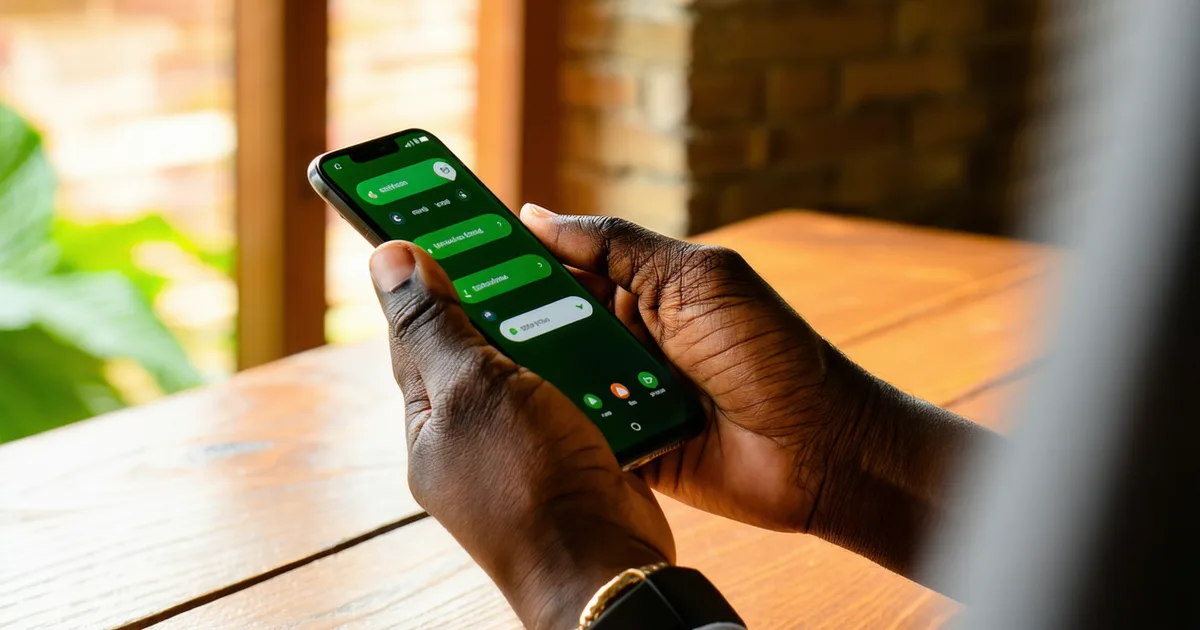
This is why channel design matters more than app design for reaching rural patients. A service built on SMS and voice callbacks can reach almost anyone with a basic mobile phone. A service built on WhatsApp voice notes can reach the majority of Kenyan smartphone users without requiring data speeds that are unavailable in most rural areas. Video consultation is a useful feature for those with the connectivity to use it — not a baseline requirement for everyone.
At Zuri Health, we built around this reality from the beginning. When a patient texts a symptom, they receive a callback from a licensed practitioner. The conversation itself happens on a voice call. The prescription or care guidance comes by SMS or WhatsApp message, which the patient can screenshot and take to a nearby pharmacy. Nothing in that flow requires a patient to have a smartphone, a fast data connection, or a WhatsApp account to get started.
The practitioner side: flexibility and reach
Telemedicine changes something important for practitioners too. A licensed clinical officer or general practitioner based in Nairobi, Mombasa, or Kisumu can consult with patients across counties without leaving their workspace. This matters for two reasons.
First, it concentrates practitioner capacity where patients are. The distribution of licensed health workers in Kenya is heavily urban — not because rural patients do not need care, but because clinic infrastructure, professional development opportunities, and financial sustainability are harder to achieve in remote settings. Telemedicine does not solve the underlying healthcare workforce distribution problem, but it allows available capacity to be shared more widely across geography.
Second, it creates a pathway for part-time and flexible practitioner participation. A doctor at a Nairobi clinic who is available for two consultation hours in the evening can see patients in rural counties who could not otherwise access them at all. The per-consultation remuneration model through M-Pesa makes this workable practically — payment reaches practitioners quickly, without the delays that informal systems sometimes involve.
Uptake and what we have observed
Patient uptake of telemedicine in Kenya is not uniform. Several patterns are consistent with what the broader digital health sector has observed across Sub-Saharan Africa. Urban and peri-urban patients — particularly those who are already active mobile internet users — tend to adopt quickly and return for follow-up consultations at higher rates. Rural uptake is more gradual and often depends on a first positive experience: a patient who got useful care through WhatsApp is significantly more likely to use the channel again and to tell people in their immediate circle.
SMS-based intake tends to attract patients who have not previously used telemedicine at all — the populations with the least reliable smartphone access. This matters because it suggests that serving the lowest-connectivity segment is possible but requires designing for it deliberately, not as an afterthought.
One pattern we find consistently is that trust in a remote consultation increases after the first interaction. Patients who are initially hesitant — wondering whether a doctor who cannot see them can genuinely help — often change their view after experiencing a structured, attentive conversation with a practitioner who takes their reported symptoms seriously and gives them actionable guidance. The medium is unfamiliar; the care itself, when done well, is not.
What telemedicine does not solve
It would be easy to write about virtual care as though it erases the healthcare access problem in rural Kenya. It does not. The challenges that telemedicine cannot reach are substantial: the absence of diagnostic equipment in rural facilities, the unavailability of essential medicines in local pharmacies, the cultural and language barriers that make formal healthcare feel inaccessible to some communities, and the structural underfunding of county health systems that limits physical capacity across the board.
Remote consultations are most effective when they work alongside functioning physical health infrastructure, not as a replacement for it. A patient in a rural sub-county who needs a blood test, an X-ray, or an IV line needs a physical facility. A practitioner conducting a remote consultation needs to be able to refer that patient somewhere that can receive them. Where referral pathways are weak or the receiving facility is itself under-resourced, telemedicine's usefulness is constrained.
The honest framing is that telemedicine is one important tool in a multi-tool problem. It extends the reach of qualified practitioners meaningfully, it reduces the burden of routine monitoring and follow-up on physical clinics, and it gives patients a way to access professional guidance without a prohibitive journey. That is genuinely valuable — and it is not the whole answer.
What it does do, for a growing number of people across Kenya's counties, is make a conversation with a licensed doctor possible on the day it is needed. For many patients, that is the difference between a condition that stays manageable and one that becomes a crisis.