People who have not spent time in Nairobi sometimes picture it through a single lens — either the city's visible prosperity or its visible poverty, rarely both at once. The reality is that both exist in close geographic proximity, in a way that is particularly stark when you look at healthcare.
Nairobi has genuinely excellent medical facilities. There are private hospitals in this city that meet international standards — modern equipment, experienced specialists, facilities that patients from across the continent travel to access. That is a real achievement, and the clinicians, administrators, and institutions that built it deserve credit for it.
What is also true is that these facilities are expensive in ways that place them out of reach for the majority of Nairobi's population — and that the public health system that is notionally available to everyone is under-resourced and overstretched in ways that make it unreliable for routine primary care. The gap between what exists and what most people can actually access is the thing I spent years thinking about before we founded Zuri Health in 2022, and it is what I find myself explaining most often when people ask why we started it.
What the access problem actually looks like in Nairobi
Nairobi's lower-income neighbourhoods — Mathare, Mukuru, Kayole, Korogocho, among many others — are densely populated and often poorly served by both public and private health infrastructure. Public health facilities in these areas are frequently overcrowded. A patient who needs a routine consultation may wait most of a day, miss work, and still not be seen. The facilities are staffed by hardworking practitioners operating under significant constraints: too many patients, not enough time, and a system that is structurally under-resourced.
Private clinic options exist in peri-urban areas, but cost is a real barrier. A consultation fee that is modest by the standards of middle-class Nairobi — several hundred shillings — can be a genuine hardship for a household living on daily wages. And that is before prescription costs, transport, and the economic impact of time away from work or informal income-generating activity.
The practical effect is that a large proportion of the population manages health problems through informal channels — self-medication from pharmacies, advice from community networks, prayer, and deferred action — until a situation becomes serious enough that formal care is unavoidable. By that point, conditions that were manageable have often become acute, and the cost of treatment is substantially higher than it would have been with earlier intervention.
Why we built the way we did
When Zuri Health's founding team first mapped the problem, we spent time talking to people in Nairobi's lower-income neighbourhoods about how they actually accessed healthcare when they needed it. The answers were consistent. People knew what good healthcare looked like. They were not ill-informed about what they needed. They were making rational decisions under real constraints — constraints of money, time, geography, and the daily calculus of competing demands.
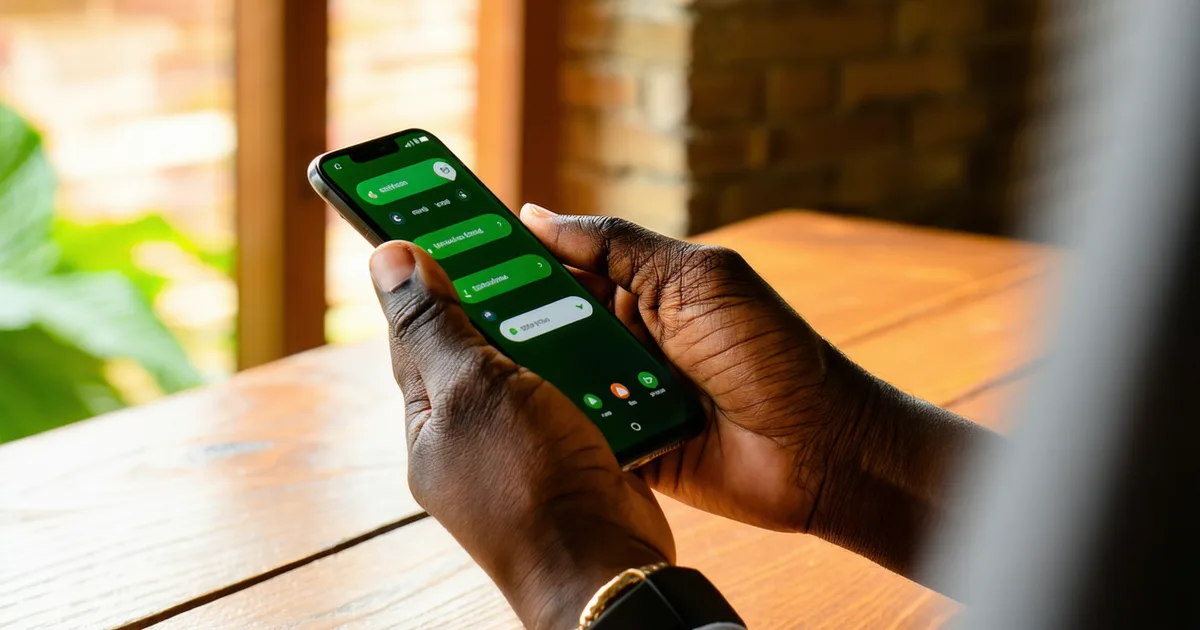
What consistently came up was the role of mobile phones. Virtually everyone we spoke to had a mobile phone. Most had WhatsApp. Almost all were comfortable using voice calls. The phone was already the channel through which people managed consequential daily activities — banking, business, family communication. The question we kept asking was: why is healthcare not available through this channel?
The answer was not that people did not want it that way. The answer was that the health system had not built for it. The formal primary care pathway — travel to a facility, register, wait, see a clinician, collect a prescription — was designed around a model of healthcare delivery that assumed physical presence as the default. There was no good reason why a patient with a straightforward acute complaint, a stable chronic condition requiring follow-up, or a question about a medication needed to be physically present to receive professional guidance. The requirement for physical presence was a feature of the legacy system, not a clinical necessity.
The multi-channel decision
We made a design decision early that has defined everything about how Zuri Health operates: the platform should reach patients through whatever channel they already use, not require them to adopt a new one. This meant building for WhatsApp, SMS, and USSD from the beginning, not as features to add later once the "proper" app had traction, but as primary access channels that carried equal clinical weight.
That decision had real consequences. It meant our patient intake needed to work over text and voice, not just through a structured app form. It meant our practitioners needed to be comfortable conducting consultations through voice notes and text exchanges, not just video calls. It meant thinking carefully about how to deliver prescriptions and care guidance in a format that worked at the end of an SMS thread, not just in a digital health record that only app users could access.
I would be dishonest if I said all of these problems were solved quickly or easily. Building clinical quality into asynchronous messaging interactions is harder than building it into a structured app flow. Ensuring that a practitioner who receives a voice note from a new patient has the context they need to respond usefully requires infrastructure that does not come free. We got some of it wrong early on and learned.
What three years of operating has taught us
Zuri Health has been running since 2022. Operating a health platform for three years teaches you things that no amount of pre-launch analysis can.
The first is that trust is the most important variable in whether someone uses a digital health service. Not the user interface, not the consultation fee, not even the quality of the practitioner — though that matters enormously. The decision to start a health conversation with an organisation you have never heard of, through a channel usually used for personal communication, requires trust that the organisation will treat you seriously, protect your information, and not waste your time. Building that trust happens one consultation at a time, through the experience itself rather than through marketing.
The second is that the populations most underserved by the formal health system are not necessarily the easiest to reach through digital channels. Urban middle-class users adopted early. Reaching patients in lower-income urban areas and rural counties required different approaches — partnerships with community health workers, SMS-based intake that did not require smartphone ownership, practitioner availability in Swahili. We built these because the original access gap we set out to address demanded them, not because they were the easiest path to growth.
The third is that practitioners are the limiting factor, not patients. There is no shortage of need for accessible primary care in Nairobi and across the region. There is a shortage of qualified, trained practitioners who are equipped to deliver remote consultations well, who understand the specific demands of the format, and who are available at the times patients need them. Building the practitioner side of the network — recruiting, training, supporting, and fairly remunerating practitioners — is where the real operational work lies.
What we are not, and why that matters
Zuri Health is a platform that connects patients to licensed practitioners. We are not a clinical authority. We do not provide diagnoses or treatment directly — practitioners on the platform do, within the scope of their licences and their professional judgment. This distinction matters for how we talk about what we offer and what patients should expect.
We are also not a substitute for emergency care, specialist care, or in-person procedures. When a consultation identifies a situation that requires physical examination, laboratory investigation, or in-person treatment, the practitioner's role is to make a clear and timely referral. The platform's value lies in what it enables within those limits, not in what it does beyond them.
What we can say, without overstating it, is that three years of building and operating Zuri Health has confirmed the premise we started with: there are hundreds of thousands of people in Nairobi, and millions more across East Africa, who have real health needs, genuine access barriers, and a mobile phone in their pocket. Connecting those things is the work. It is not finished. It probably will not be for a long time. But it is the right work to do.