There is a particular kind of invisible barrier in healthcare that is harder to address than distance or cost: the barrier of what a person believes others will think of them for seeking help. In many communities across East Africa, mental health difficulties carry a social weight that physical illness does not. A person with malaria or a broken leg receives sympathy. A person with persistent anxiety, depression, or another mental health condition may encounter judgment, disbelief, or dismissal — from family members, from community leaders, from the immediate social environment that shapes daily life.
This is not a problem that technology can solve. Stigma is a social phenomenon, embedded in culture and language and community norms. What digital platforms can do is create a different kind of access point — one where the social performance of help-seeking is less visible, and where the first step towards support does not require announcing to anyone that you are taking it.
The particular weight of stigma in East African contexts
Discussions of mental health stigma in Africa sometimes flatten significant diversity across communities, countries, and generations. The experience of a young urban professional in Nairobi discussing mental wellbeing with peers is meaningfully different from the experience of a rural community member in a county where psychological distress may be attributed to spiritual causes or family conflict rather than recognised as a health condition.
What is consistent across contexts, in what practitioners and community health workers describe, is that men in particular face strong norms around emotional stoicism — the expectation that distress should be managed privately and that seeking help represents weakness. This is not unique to East Africa, but it is significant in the populations Zuri Health serves, and it shapes who engages with mental health support and how.
Young people, particularly those who are active on social media and have been exposed to more open conversations about mental health through global platforms, often have lower barriers to acknowledging that they are struggling. But acknowledging internally and being willing to seek formal support are different things. The step from recognising a problem to making a clinic appointment — explaining to a receptionist why you are there, sitting in a waiting room, being seen by people from your community — remains significant even where self-awareness about mental health is growing.
How digital access changes the first step
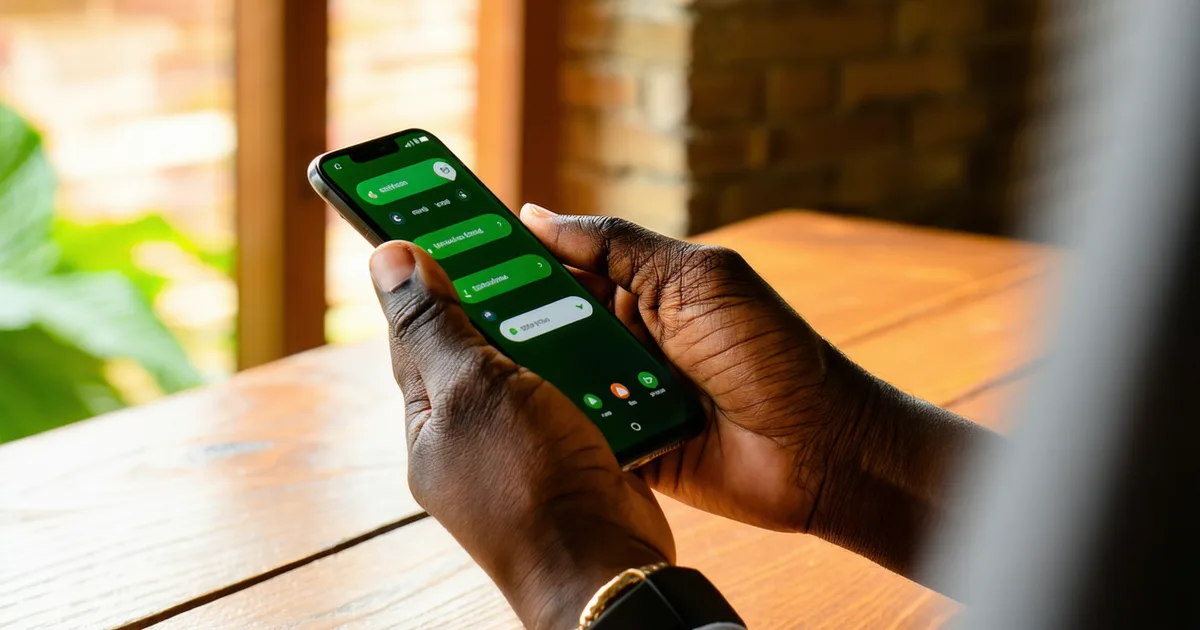
When a patient can send a WhatsApp message describing how they have been feeling, from a private space, at a time they choose, without anyone around them knowing what they are doing — the social visibility of help-seeking changes completely. They have not "gone to see a mental health person." They have sent a message on their phone. The action looks, from the outside, indistinguishable from any other phone use.
This is not about trivialising mental health support or making it feel like it does not matter. It is about recognising that the decision to reach out is often more about the process of reaching out than about the substance of what follows. Once a person has had a first conversation with a practitioner who takes their experience seriously, asks useful questions, and provides some sense of direction — the threshold for subsequent engagement drops considerably.
We see this pattern in how mental health consultations develop on the Zuri Health platform. First contacts tend to be cautious and brief — a patient describing their situation in general terms, clearly uncertain how the conversation will go. Follow-up interactions, when they happen, tend to be more detailed. Patients who describe anxiety or sleep difficulties in a first message often, by a third or fourth interaction, are sharing more context about the pressures driving those symptoms. The digital channel did not make those subsequent conversations easier by any technological magic; it made the first one lower-stakes enough to happen at all.
What mental health support through a digital channel can and cannot offer
It is important to be direct about the scope of mental health support through a telemedicine platform, and what it does not replace.
A consultation with a licensed practitioner through WhatsApp or a voice call can provide: a structured initial assessment of what a person is experiencing; general health guidance about sleep, stress, and daily habits that support mental wellbeing; information about what professional support options exist and how to access them; and in some cases, appropriate referral to an in-person mental health specialist, psychiatrist, or counsellor.
What it cannot provide is therapy. Psychotherapy — whether cognitive behavioural, interpersonal, or any other structured modality — requires a trained therapist, a consistent therapeutic relationship, and a structured process that a standard telemedicine consultation does not replicate. We are not positioned as a therapy platform, and it would be misleading to suggest otherwise.
What we offer is access to a first conversation and appropriate onward guidance. For patients who have no other practical access to any mental health support at all, that first conversation can be significant. It is not a full solution. It is a door that was otherwise closed.
The practitioner dimension: training for sensitive conversations remotely
Mental health consultations place specific demands on practitioners. Remote mental health discussions require practitioners to be attentive to what is not being said, to ask questions that create space for disclosure without feeling intrusive, and to be prepared for conversations that involve acute distress or, in some cases, risk.
Practitioner preparation for remote mental health consultations at Zuri Health includes protocols for recognising when a situation requires urgent escalation — when a patient's disclosure suggests they may be at risk of harm to themselves or others, and what to do in that situation including connecting the patient with emergency services or directing them to a physical facility. These protocols exist because remote conversations about mental health, like in-person ones, can surface situations that require immediate action beyond anything a remote consultation can provide.
This is the kind of operational infrastructure that separates a digital health service from an informal messaging service. The channel is familiar; the clinical process behind it needs to be designed.
Community health workers as a bridge
One model that has shown promise in East African mental health access is the use of trained community health workers as a first point of contact — people embedded in communities who can have initial wellbeing conversations with community members in their own language, build sufficient trust to introduce the idea of professional support, and facilitate the connection to a practitioner when that is appropriate.
Digital health platforms strengthen this model by giving community health workers a straightforward pathway for referral — a WhatsApp number or USSD code they can pass on, rather than an instruction to travel to a distant facility. The CHW serves as a trusted intermediary; the digital channel removes the friction from what comes next. Neither element works as well without the other.
Changing conversations, over time
Mental health awareness in East Africa is genuinely changing, particularly among younger adults in urban centres. Social media has been both a cause and a carrier of more open conversation about anxiety, burnout, grief, and emotional difficulty. Celebrities, public figures, and ordinary people sharing their experiences have shifted what it is acceptable to admit to, at least in some social contexts.
This creates a different kind of opportunity for digital health services than existed even five years ago. There is a growing population of people who understand that what they are experiencing has a name, who have followed enough public conversation to know that professional support can help, but who have not yet navigated the practical step of accessing that support. For this group, the barrier is not awareness — it is access.
Digital mental health access, done carefully, is well-positioned to close that gap. It requires honest communication about what it can and cannot offer, genuinely trained practitioners, and clear escalation pathways. It is not a replacement for a well-resourced mental health system. It is a way of reaching people who would otherwise reach nothing.
Every person who sends that first WhatsApp message about how they have been feeling is doing something that, for many of them, took longer to decide than the sending itself. That matters, and it is worth building for.