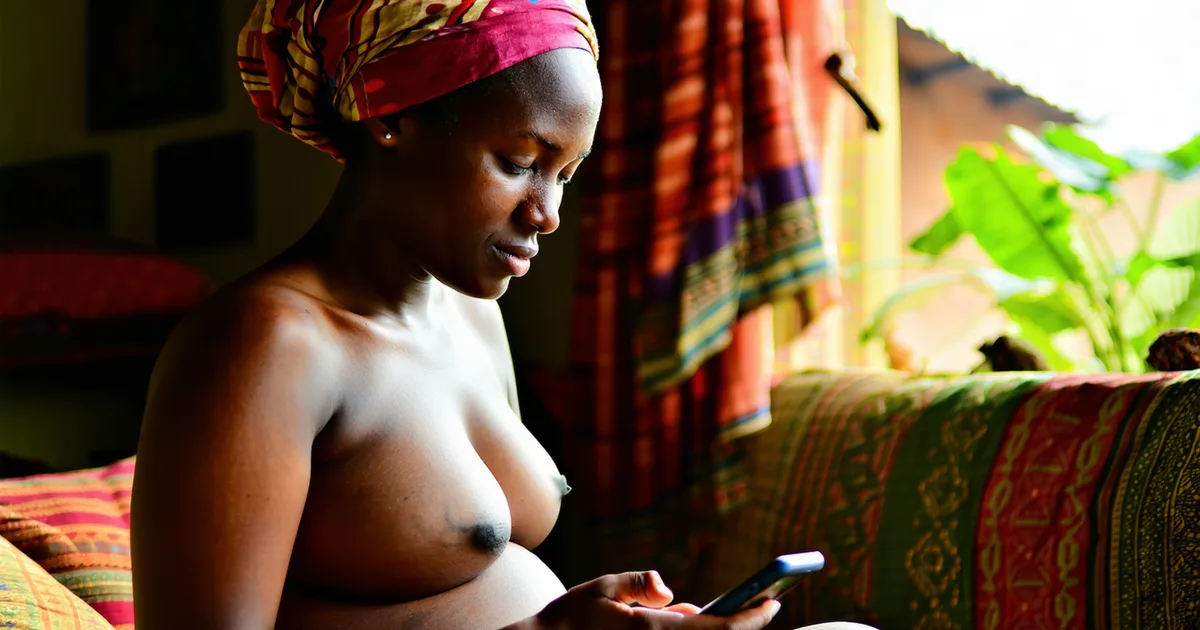
Pregnancy and early motherhood in East Africa are periods when consistent engagement with the health system matters a great deal — and when that engagement is hardest to sustain for women in rural and peri-urban settings. The physical demands of pregnancy, the logistical challenges of travel for women who may not have independent access to transport, the economic pressure of losing a day's income for a clinic visit that is perceived as routine: all of these factors push against the regular antenatal contact that good pregnancy care requires.
The gap between recommended antenatal visit schedules and the visits that actually happen is well documented across the region. Women who intend to attend all recommended antenatal check-ins frequently do not, not because they are indifferent to their health or their baby's, but because the practical barriers to attendance are substantial and the consequences of any single missed visit are not immediately visible. The visit they skipped last month did not obviously cause a problem. So the visit next month feels skippable too.
What antenatal digital support can realistically provide
Remote maternal health support, delivered well, fills a specific and genuinely useful niche: the space between formal antenatal visits. A virtual check-in is not a replacement for the physical examination, blood pressure measurement, fundal height assessment, and foetal heartbeat check that a skilled midwife or nurse performs at an antenatal clinic. We want to be clear about that boundary.
What a structured remote contact can do is maintain the connection between a pregnant woman and a healthcare professional throughout her pregnancy — answering questions, monitoring reported symptoms that might warrant escalation, reinforcing health messaging about nutrition, rest, and danger signs, and ensuring she knows clearly when to seek in-person care without delay.
For women who are attending antenatal care but finding it hard to attend consistently, digital support extends the care relationship beyond clinic walls. For women who have not yet registered for antenatal care at all — a meaningful proportion in some rural counties — it can be a first point of contact that introduces them to the care system in a lower-threshold way than a clinic visit.
SMS reminders: simple, low-data, and consistently effective
Among the digital tools used in maternal health support, SMS reminders occupy an interesting position: they are technologically unimpressive and operationally straightforward, but the evidence from programmes across East and West Africa consistently suggests they work. A reminder message sent to a pregnant woman three days before her scheduled antenatal appointment, and again the day before, measurably improves attendance compared to no reminder.
This effect is not mysterious. Appointment attendance requires the competing demands of a particular day to align favourably. A reminder, arriving at a quiet moment, activates the intention to attend that was already present. It is a small intervention and it does a small thing — but the small thing has consistent and practical consequences for maternal health engagement.
The constraints of SMS for maternal health support are also real: the channel is one-directional and cannot receive responses, it cannot personalise beyond name and appointment date without significant infrastructure, and it does nothing for women who do not have a scheduled appointment to remind. SMS reminders work best as one component of a broader engagement approach, not as a standalone digital maternal health strategy.
The scenario of a first-pregnancy woman in rural Uganda
Consider a young woman experiencing her first pregnancy in a rural district in eastern Uganda, roughly 30 kilometres from the nearest health facility with a functional maternity unit. She is aware she should be attending antenatal clinic, but the distance, the cost of the journey, and uncertainty about the process have all contributed to delayed registration. At 18 weeks, she has not yet had her first antenatal visit.
Through a community health worker who is connected to Zuri Health, she sends a WhatsApp message describing her situation. A practitioner responds within a few hours, takes a brief history, addresses her most pressing questions about what she has been experiencing physically, and explains clearly what the antenatal visit process involves, what to expect, and why attending matters. The practitioner helps her identify the nearest facility and discusses when she should be seen given her stage of pregnancy.
This is not a substitute for the antenatal visit itself. But it is the interaction that makes the visit more likely to happen. For a woman who has been deferring because the formal health system felt unfamiliar and intimidating, a warm and informative conversation with a practitioner — conducted on her own phone, at home, in a language she is comfortable in — can change the calculus.
Danger signs education: when digital support saves lives
One of the highest-value contributions of digital maternal health contact is consistent, clear education about pregnancy danger signs — the symptoms that indicate a situation has moved from normal to urgently requiring in-person care. These include warning signs like severe headache, visual disturbances, unusual swelling, reduced foetal movement, and heavy bleeding, among others.
Women who can recognise these signs and understand they require immediate action have better outcomes than women who do not, because the time between symptom onset and receiving appropriate care is the critical variable in many obstetric emergencies. A woman who does not know that a particular symptom is serious may wait. A woman who has been clearly told that this specific sign means go now — not tomorrow, now — is more likely to seek care at the moment it matters.
Delivering danger signs education through digital channels — a WhatsApp message series, a practitioner-led conversation during a check-in, an SMS reminder that includes a brief safety message — reaches women where they are rather than requiring them to be at a facility to receive the information. The information itself is not complicated; the challenge has always been ensuring it reaches the right people consistently. Digital channels help with that reach.
Postnatal contact and the period after delivery
The postnatal period — particularly the first six weeks after delivery — is a time when many women lose contact with the health system. Antenatal care creates a pattern of regular visits that ends with delivery, and the postnatal visit that should follow within a few days is one of the most frequently missed appointments in maternal health programmes across East Africa.
Digital outreach in the immediate postnatal period can bridge this gap by maintaining contact with new mothers through the same channels they were using during pregnancy. A check-in message at day three, day seven, and week four after delivery — asking how the mother is feeling, whether the baby is feeding, whether she has any concerns — is easy to send and creates a prompt for the woman to raise anything that is worrying her before it escalates.
For mental health specifically, the postnatal period is a window of elevated risk that is significantly underrecognised in many East African communities. The emotional adjustment, sleep deprivation, and physical recovery of early motherhood can combine in ways that some women find genuinely overwhelming, but the conversation about this is less normalised than it might be. A digital check-in that asks simply how the mother is feeling — not just how the baby is doing — opens a door that is otherwise rarely opened in the first weeks after birth.
Working alongside, not around, formal health systems
Digital maternal health support at its most effective works in genuine partnership with the formal antenatal care system, not as an alternative to it. The goal of a platform like Zuri Health is to increase the proportion of pregnant women who are engaged with skilled antenatal care, attending clinic visits, and supported between those visits — not to create a parallel system that substitutes for the in-person care that some situations require.
This requires clear communication to patients about what remote support provides and when physical care is essential, functional referral pathways so that a practitioner who identifies a concern can direct a patient to a facility that can act on it, and relationships with the public health infrastructure that make those referrals meaningful.
Building those relationships takes time, and it is work that goes beyond product design. It is the unglamorous operational work of digital health in Sub-Saharan Africa: the conversations with county health departments, the partnerships with community health programmes, the training of community health workers who are the most trusted first point of contact for many women across the region.
What drives the work is straightforward enough: a pregnant woman in rural Kenya or Uganda who has consistent contact with a skilled practitioner throughout her pregnancy, who knows the danger signs and acts on them, and who has support in the weeks after delivery, is better positioned than one who does not. Every digital interaction that contributes to that consistency is doing something worth doing.