Chronic non-communicable conditions — hypertension, type 2 diabetes, asthma, and related conditions — are not new health challenges in Sub-Saharan Africa, but their scale is changing. Urbanisation, shifting dietary patterns, reduced physical activity in sedentary work settings, and improving survival from conditions that once went undiagnosed are all contributing to a growing population of people who need ongoing care rather than one-time treatment.
The healthcare system problem this creates is not primarily one of clinical knowledge. Practitioners in Kenya and across East Africa understand how to manage these conditions. The problem is a structural one: chronic disease management requires consistent, repeated contact between patient and practitioner over months and years. The access barriers that make any single consultation difficult — distance, cost, time — are multiplied across every follow-up visit the condition requires. Patients who cannot sustain regular engagement fall out of care, and conditions that were manageable become acute.
The follow-up visit problem
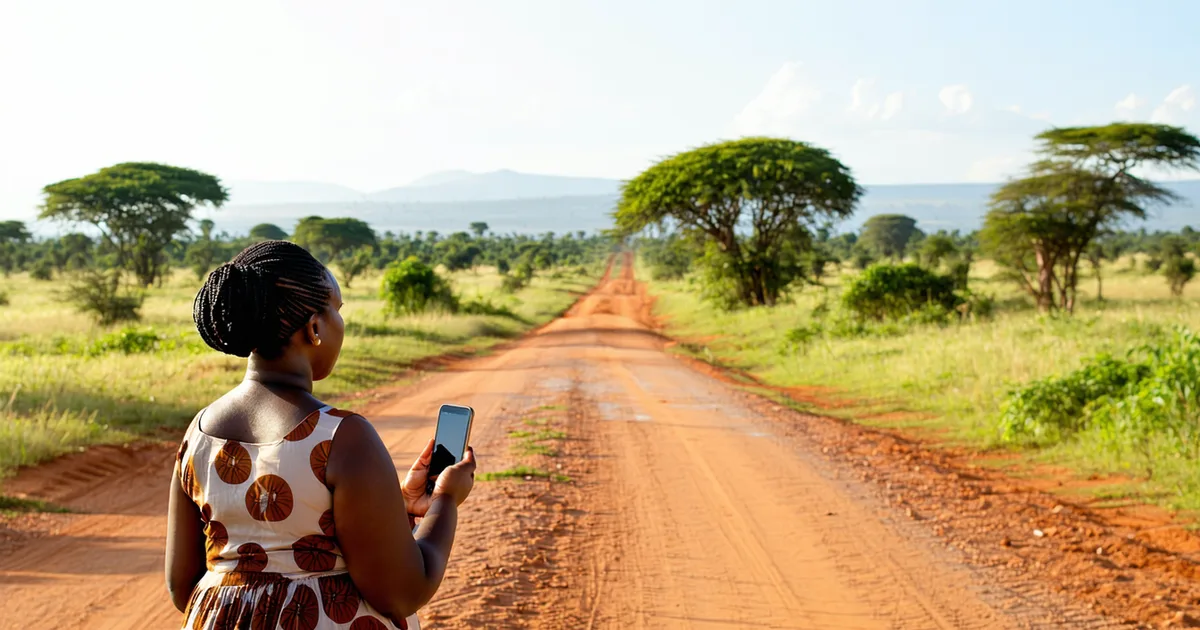
Consider a patient in a town in western Kenya who is diagnosed with hypertension at a district hospital. The initial consultation happens. The patient receives a prescription and is told to return in four weeks to check that their blood pressure is responding to medication and to review adherence. That return visit is where the system starts to break down.
The cost of the initial visit was manageable because the patient had a specific complaint — they were unwell enough to justify the expense. The follow-up visit, by contrast, requires spending money and losing a day of work when they feel reasonably well. The rational short-term calculus says to skip it. This happens across thousands of patients with hypertension, diabetes, and other conditions throughout the region, and the long-term consequence is a disease burden that is much harder and more expensive to manage than consistent monitoring would have required.
Remote follow-up addresses this specific failure point. A structured check-in via voice call or WhatsApp — ten to fifteen minutes with a practitioner who reviews reported blood pressure readings, asks about medication adherence and any side effects, and adjusts guidance as needed — accomplishes the core clinical purpose of the follow-up visit without the journey. The patient's blood pressure cuff at home, or at a nearby pharmacy, provides the measurement. The practitioner provides the clinical judgment.
What digital check-ins require to be clinically useful
Remote chronic disease management is not simply replicating in-person appointments over a phone call. Done poorly, it produces a brief exchange that generates neither useful clinical information nor actionable guidance. Done well, it requires some specific elements.
The patient needs to have access to the measurements that matter. For hypertension monitoring, this means access to a blood pressure cuff. For diabetes monitoring, it means access to blood glucose testing equipment, which is significantly more expensive and less widely available. This is a real constraint: digital follow-up is easier to implement for conditions where the relevant monitoring can be done with widely available, low-cost equipment than for those requiring laboratory or specialist equipment.
The consultation protocol needs to be structured enough to gather consistent information across check-ins. A practitioner asking open-ended questions each time produces variable data. A practitioner working through a short structured intake — current readings, medication taken as prescribed, any new symptoms, any changes in daily routine — produces data that is comparable across visits and flags trends that might otherwise be missed.
The patient needs to understand what they are monitoring and why it matters. Health literacy varies considerably, and a patient who does not understand the relationship between their daily medication and their blood pressure readings is unlikely to monitor or report consistently. Remote chronic care works best when it includes a patient education component — short, clear explanations of what the condition means and what the patient can do about it — not just clinical instructions.
Language and communication in chronic care contexts
For chronic disease management in particular, the ability to communicate in a patient's preferred language is more than a convenience feature. Patients managing conditions over long periods need to understand their situation well enough to make daily decisions — whether to take their medication when they feel well, whether a particular symptom warrants a call, how diet and activity affect their readings.
In Kenya, much of rural and peri-urban primary care happens in Swahili, and in some counties in local languages. A service that operates only in English creates a comprehension barrier that is especially harmful for ongoing care, where misunderstandings accumulate over time. At Zuri Health, practitioners are available in both English and Swahili, and we recognise that language flexibility is not a peripheral feature but a requirement for serving the populations that face the greatest access gaps.
The limits of remote management: knowing when physical visits are needed
Remote chronic disease monitoring is not a substitute for physical examination when the clinical picture changes. This boundary is important to state clearly.
A patient whose blood pressure has been stable on a consistent medication regimen for six months can be followed up remotely with a high degree of confidence. A patient whose readings are suddenly elevated, who reports new symptoms, or whose medication adherence has broken down may need a physical assessment — examination, an ECG, blood tests — that a remote consultation cannot provide. The practitioner conducting the remote check-in needs both the clinical judgment to recognise when escalation is warranted and the communication skills to make that recommendation clearly to a patient who may be resistant to making a physical visit.
The goal of a well-run remote chronic care programme is to maximise the proportion of routine follow-up interactions that can be handled remotely, while having clear escalation pathways for the interactions that cannot. This requires genuine investment in practitioner training for remote care — not an assumption that the same practitioners who do good in-person chronic disease management will automatically do good remote chronic disease management without any preparation.
What we have observed in practice
At Zuri Health, a meaningful share of our consultations are follow-up interactions from patients managing ongoing conditions. The picture that has emerged is consistent with patterns described in digital health programmes across East Africa and in global literature on remote chronic care.
Patients who have a first positive experience with a remote check-in return for subsequent ones at rates we did not expect from populations with no prior telemedicine experience. The sticking point is not reluctance to engage with the format once it has been experienced; it is getting patients to try it the first time. In many cases, a referral from someone the patient trusts — a family member who used the service, a community health worker who mentioned it, a practitioner at a physical clinic who suggested a remote follow-up — is more effective at driving first use than any digital channel.
The conditions that benefit most from remote follow-up are the stable, well-characterised ones: controlled hypertension, stable type 2 diabetes, maintenance-phase asthma. These are also, not coincidentally, the conditions that account for a large share of the routine primary care workload across Kenya's health system. Shifting even a portion of that routine follow-up to remote channels creates capacity at physical facilities for the patients who genuinely need to be there.
The infrastructure question that digital care cannot answer alone
Remote chronic disease management works best where basic supply chains function — where the medications a practitioner prescribes are available at a pharmacy the patient can reach, where a blood pressure cuff is accessible in the community, where a referral to a physical facility results in a patient being seen.
In many parts of rural Sub-Saharan Africa, these supply and infrastructure conditions are inconsistent. A practitioner may prescribe a medication that the patient cannot obtain locally. A follow-up recommendation may require a laboratory test that the nearest facility cannot perform. These gaps do not make remote chronic care less valuable — they make the combination of remote care and functional physical infrastructure more valuable, which is a different thing.
The honest version of what digital platforms like Zuri Health can offer is: better follow-up for the patients who are already connected to a care pathway, and a more accessible entry point for patients who have not yet engaged with care. The deeper structural challenges of supply, workforce distribution, and facility capacity require investment and policy that go well beyond what any single digital health platform provides.
What is clear, from conversations with practitioners and patients across the platform, is that a structured remote check-in reaching a patient who would otherwise have skipped their follow-up visit entirely is doing something real and useful. The measure of success is not whether it is as good as an ideal in-person consultation — it is whether it is better than no contact at all. Most of the time, it is.